
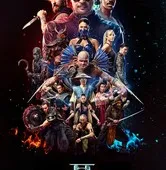
When the Tournament Returns: A Deep Dive into Mortal Kombat 2
There are sequels that arrive with the weight of expectation bearing down on them like a stone slab, and then there are sequels that seem almost liberated by that pressure — films that understand exactly what made their predecessor tick and choose to amplify it rather than second-guess it. Mortal Kombat 2 falls, with considerable satisfying force, into the latter category. Having followed the franchise since its pixelated arcade days, I walked into this film carrying decades of accumulated mythology, fandom, and genuine affection for its chaotic, operatic universe. What I found surprised me in the best possible way.
The original 2021 reboot did something smart: it grounded the supernatural mayhem of Mortal Kombat in a character who had no prior connection to the tournament, giving audiences a window through which to absorb the lore. That structural scaffolding served its purpose. With the sequel, the filmmakers wisely abandon that approach entirely. Here, there is no hand-holding. The world of Outworld and Earthrealm is presented as a given, and that confidence translates directly to the screen with exhilarating momentum.
A World Finally Breathing at Full Capacity
What immediately distinguishes Mortal Kombat 2 from its predecessor is the sheer visual ambition on display. Production design has taken a monumental leap forward. Outworld, in particular, has been reimagined as a genuinely alien ecosystem — vast, foreboding, and architecturally spectacular in ways that go far beyond what the first film attempted. The throne room sequences alone contain more visual invention than entire fantasy blockbusters released in the same season.
The cinematography leans into shadow and saturated color with a confidence that feels earned rather than decorative. Fight sequences are choreographed with a clarity that respects the audience's intelligence — you can follow every movement, every pivot, every devastating exchange without the incoherent rapid-cut editing that plagues so many modern action films. This is old-school clarity married to contemporary visual effects, and the marriage works.
Character and Performance: Finding the Heart Beneath the Spectacle
It would be easy to dismiss Mortal Kombat 2 as pure spectacle, and critics inclined toward that dismissal will find enough surface-level evidence to sustain the argument. But doing so requires ignoring some genuinely committed performances and surprisingly effective character work happening beneath all that chaos.
The ensemble is expanded significantly here, pulling in iconic figures from the game's deeper roster that devotees have been anticipating for years. Each new character introduction is handled with a deftness that suggests the screenwriters actually care about these personalities as more than mere vehicles for combat. There is texture to the rivalries, history to the alliances, and genuine menace radiating from the antagonists that elevates the stakes beyond mere tournament survival.
Particular praise must go to the film's handling of its villain roster. Rather than concentrating malevolence in a single figure, Mortal Kombat 2 distributes it across a hierarchy of threat, each layer revealing something darker beneath. This structural choice keeps the narrative unpredictable in ways the first film could not manage, bound as it was to the requirements of origin storytelling.
The Script: Smarter Than You Might Expect
Mortal Kombat 2 is not attempting to be The Godfather. That much is clear within the opening sequence. But it is attempting something more interesting than it is often given credit for: a coherent mythological epic that takes its own internal logic seriously. The screenplay respects the lore while making intelligent choices about what to streamline and what to expand.
Themes of destiny, identity, and the cost of power run through the narrative with more consistency than genre expectations might suggest. Characters grapple with what it means to fight not just for survival but for something worth preserving — their world, their families, their sense of self. These are not profound philosophical meditations, but they give the action sequences an emotional underpinning that transforms fights from mere spectacle into something with genuine dramatic weight.
There is also a welcome streak of dark humor threading through the script that prevents the film from disappearing entirely into self-seriousness. The balance is delicate and not always perfectly maintained, but the attempt itself reflects a creative team that understands its audience — people who love the absurdity of this universe while also wanting it treated with a measure of respect.
Action Choreography and Technical Craft
Let us be direct about what audiences fundamentally arrive to experience: the fights. And on this count, Mortal Kombat 2 delivers with extraordinary conviction. The action choreography has been elevated considerably from the first film, bringing in talent that understands how to construct combat as storytelling rather than simply as spectacle.
Each major confrontation has its own distinct rhythm and emotional register. A tense, almost intimate duel in a shadowed corridor feels entirely different from a large-scale battle sequence set against the desolate architecture of Outworld. The film demonstrates an awareness that variety is as important as intensity — that if every sequence operates at the same pitch, nothing lands with genuine impact.
The sound design deserves particular acknowledgment. The audio landscape of Mortal Kombat 2 is aggressive and immersive in a theatrical setting, mixing the crunch of physical combat with an orchestral score that takes genuine compositional risks. Watching this on a large screen with premium audio is the definitive experience, and the film has clearly been built with that environment in mind.
Where the Film Falls Short
No honest assessment of Mortal Kombat 2 can avoid its limitations. The pacing in the second act develops a troublesome unevenness — a stretch of approximately twenty minutes where the film feels uncertain about which narrative thread to prioritize. The momentum that had been built so effectively in the opening act dissipates during this section, and while it recovers strongly for the finale, the interruption is noticeable.
Certain characters, particularly some of the newer additions to the roster, feel underdeveloped in ways that will frustrate less invested viewers. The film assumes a degree of affection for the source material that not all audience members will share, and those arriving without prior familiarity may find themselves adrift during sequences where the film leans heavily on established mythology.
The dialogue, while functional and occasionally sharp, can tip into earnest cliche during emotional beats that might have benefited from a lighter touch. These are not fatal flaws, but they are real ones, and they prevent the film from achieving the kind of complete, cohesive excellence that would place it among the genuinely great video game adaptations.
A Franchise Finding Its Footing
What Mortal Kombat 2 ultimately represents is a franchise discovering its identity with increasing confidence. The stumbles here are the stumbles of ambition — a film reaching for something genuinely substantial and not quite grasping every element it attempts. That is a far more interesting failure mode than the timid, self-limiting approach that so many franchise sequels adopt.
For the community of fans who have watched, debated, and celebrated this universe across decades and multiple media, this sequel is a genuine event. It honors what the source material has always been while pushing the cinematic version toward something that could sustain a long-running franchise if the creative team maintains this level of investment. The mythology is rich enough to support it. The characters are compelling enough to carry it. The craft on display here suggests a team that knows how to deliver it.
How to Watch Mortal Kombat 2 Online
Mortal Kombat 2 carries an R age rating in the United States, reflecting its intense combat sequences and mature thematic content. Viewers under 17 require an accompanying adult in theatrical settings, and parental guidance is strongly advised for home viewing with younger audiences.
For those looking to watch, stream, or download the film across available platforms, options vary by region and subscription status. The film is currently available to rent or purchase on Amazon Prime Video, where members can also access offline download functionality. Apple TV offers the film in high-definition and 4K HDR where supported, with download availability for offline viewing after purchase or rental. YouTube Movies provides a rent-and-buy option with download capability through the mobile app for on-the-go access.
Netflix subscribers should check regional availability, as the title may appear on the platform depending on licensing agreements in specific territories. Hulu users in the United States may find the title available depending on current content rotation, with download options subject to subscription tier. Peacock offers the film to premium subscribers, with free access tiers typically not covering new major releases of this profile. For those seeking unblocked access while traveling internationally, a VPN connected to your home region may restore access to platforms where the film is already included in your subscription.
The film is not currently available for free without a subscription on any major legitimate streaming service, and premium rental pricing is consistent across most platforms at standard new-release rates.
Pros
- Spectacular and coherent action choreography that respects the audience's ability to follow combat sequences
- Significant visual upgrade over the first film, with Outworld rendered as a genuinely alien and impressive environment
- Expanded roster handled with surprising care, giving iconic characters meaningful screen presence
- Strong villain hierarchy that distributes menace effectively across multiple antagonists
- Confident world-building that trusts the audience rather than over-explaining the mythology
- Sound design and orchestral score that elevate the theatrical experience considerably
- Dark humor woven naturally into the script prevents tonal collapse into self-seriousness
Cons
- Second act pacing loses momentum during a noticeable stretch that disrupts the film's forward drive
- Several new character additions feel underdeveloped, leaving their potential only partially realized
- Dialogue during emotional beats occasionally defaults to earnest cliche rather than finding more distinctive expression


