

When Words Become Weapons: A First Look at Choicer Voicer
There are moments in gaming where a concept hits you so unexpectedly that you have to pause and genuinely appreciate the creativity behind it. Choicer Voicer is one of those rare titles that earns that pause. Built around the intersection of voice recognition, narrative decision-making, and real-time consequence systems, this game asks one deceptively simple question: what if your voice could literally shape the world around you? After spending a considerable amount of time with it across multiple sessions, I can say with confidence that Choicer Voicer is unlike anything I have played in recent memory, and that is meant as a compliment of the highest order.
The Core Loop: Speak, Choose, Adapt
At its heart, Choicer Voicer is a narrative-driven experience where players speak their choices aloud, and the game interprets not just what you say, but how you say it. Tone, pace, and word selection all factor into outcomes. This is not gimmickry — the system is genuinely deep. Early on, I tested the boundaries by speaking the same dialogue option in different emotional registers, and the results were meaningfully distinct. A character who trusted me in one playthrough became wary in another, simply because I delivered the same words with hesitation instead of confidence.
The loop itself flows remarkably well. You are dropped into branching story scenarios where NPCs respond dynamically to your vocal input. There is no pause menu cluttering your immersion — decisions unfold at the rhythm of real conversation. For veterans of narrative RPGs, this will feel like the next evolutionary step. For newcomers, the learning curve is gentle enough that it never becomes discouraging.
Story and Setting: A World That Listens
Choicer Voicer takes place in a near-future city called Verdana, where a mysterious signal has given certain individuals the ability to alter reality through spoken language. You play as Maren, a linguistics researcher who stumbles onto a conspiracy that reaches into the highest levels of the city's governing body. The narrative is layered, occasionally slow in its middle chapters, but consistently rewarding for those who engage with its lore.
What sets the story apart is how the game tracks your vocal history. Verdana remembers the promises you made three chapters ago and holds you accountable. Side characters reference things you said in passing. It creates a sense of organic continuity that most choice-based games only approximate. By the time I reached the third act, I felt genuinely invested in consequences that were entirely self-authored. That is a difficult achievement to pull off, and this game manages it.
Visuals and Audio: A Carefully Constructed Atmosphere
Visually, Choicer Voicer leans into a stylized realism that serves its themes well. Verdana is rendered with a cool, slightly clinical palette — lots of slate blues and warm ambers that shift based on your standing with different factions. It is not the most technically demanding game you will ever encounter, but the art direction is purposeful and consistent. Character animations during dialogue sequences are notably expressive, which matters enormously in a game where conversation is the primary mechanic.
The audio design deserves special mention. Since voice is central to the experience, the sound team has clearly invested serious effort into the game's sonic landscape. Ambient noise in Verdana feels alive without being distracting. The musical score adapts dynamically based on the emotional temperature of scenes, and it does so with subtlety rather than heavy-handedness. Voice acting across the cast is strong across the board, with only a few minor supporting characters feeling slightly underwritten in their delivery.
Performance Across Platforms and Accessibility Features
One of the areas where Choicer Voicer earns genuine praise is its approach to accessibility. Recognizing that not all players can use the voice recognition feature comfortably, the developers have included a full text-based input system that mirrors the vocal mechanics without compromise. This is smart design. No one is excluded from the experience based on hardware limitations or physical ability.
Performance is solid across the platforms I tested. On PC, the game runs cleanly even on mid-range hardware, with frame rates staying stable during the more complex environmental scenes. The voice recognition latency is impressively low on a decent microphone setup, though I did notice occasional misreadings during noisier sessions. A quiet environment genuinely improves the experience.
Where Choicer Voicer Falls Short
No review worth reading glosses over the rough edges, and Choicer Voicer has a few. The mid-game pacing dips noticeably around chapters five and six, where the narrative becomes overly focused on exposition at the expense of player agency. You can feel the story holding back its momentum to deliver worldbuilding that could have been woven in more elegantly. It is not a game-breaking issue, but it did test my patience across two separate playthroughs.
The voice recognition system, while impressive in design, stumbles in certain edge cases. Accented speech patterns are handled inconsistently, and players with non-standard dialects may find themselves repeating inputs more often than they should. This is an industry-wide challenge with voice tech, but it feels more pronounced here given how central the mechanic is to the entire experience. The developers have acknowledged this in post-launch notes, and updates are reportedly addressing it.
There are also moments where the branching logic reveals its seams — instances where your choices feel meaningfully different on the surface but converge toward similar outcomes a chapter later. Experienced players of games like Disco Elysium or Pentiment will notice this more acutely. It does not undermine the overall experience, but it is a sign that the narrative architecture, ambitious as it is, has limits.
Replayability and Community Engagement
Choicer Voicer has a strong replay incentive built into its design. With dozens of branching variables, tonal modifiers, and faction-based consequences, two playthroughs can feel genuinely different in character even when following similar story paths. The community around the game has already begun documenting the more obscure dialogue branches, and watching those discoveries emerge has been its own form of entertainment.
The developer has also shown an interest in community-driven content, with early signals that mod support may arrive in a future update. Given how the game's systems are structured, the potential for community mods is considerable, and that prospect adds another dimension to its long-term appeal.
Final Verdict
Choicer Voicer is a bold, thoughtful experiment in interactive storytelling that lands far more often than it stumbles. It is not a perfect game, but it is a genuinely innovative one — the kind that pushes the medium forward and makes you think differently about what games can do. If you have any tolerance for narrative-driven experiences and you are curious about where voice technology is headed in gaming, this is one of the most compelling answers currently available. It earns its place on any serious gamer's list.
How to Download Choicer Voicer
Availability and Launch
Choicer Voicer is available now through major digital storefronts. The base game is not free, though a free demo version covering the first two chapters is available for players who want to test the voice recognition system before committing to a purchase. Pricing sits in the standard mid-tier range for indie narrative titles, and occasional sales bring it down significantly.
Platforms
The game is officially supported on PC via Steam and the Epic Games Store, with a Mac version also available through the same channels. A console release for PlayStation 5 and Xbox Series X/S has been confirmed for a future window but is not yet live. There is currently no native mobile or Nintendo Switch version. Players on unsupported platforms looking to play may explore cloud gaming services, though official support there is limited. An emulator path is not a recommended or supported route for this title.
Install
To install on PC, simply search for Choicer Voicer on Steam or the Epic Games Store, purchase or download the free demo, and follow the standard install prompts. The installation size sits at approximately 18 GB. A microphone is strongly recommended but not required if you prefer the text input mode.
System Requirements
Minimum PC specs include a dual-core processor running at 2.5 GHz or higher, 8 GB of RAM, an NVIDIA GTX 960 or equivalent GPU, and Windows 10 or later. Mac users will need macOS 12 or above with Apple Silicon or equivalent Intel hardware. There is no Android version currently available.
Cheats and Mods
Official cheats are not built into the current version of Choicer Voicer. The developers have stated that mod tools are under consideration, but no official mods or modding framework has been released yet. Third-party cheats exist in certain community spaces but are used at your own risk and are not endorsed by the studio.
Unblocked Access
Choicer Voicer is not available through browser-based platforms, so unblocked play in school or workplace environments is not straightforwardly possible. The game requires a client install and does not currently have a web version. Cloud gaming services may offer a workaround in environments where local installs are restricted, depending on what services are accessible on the network in question.
Screenshots
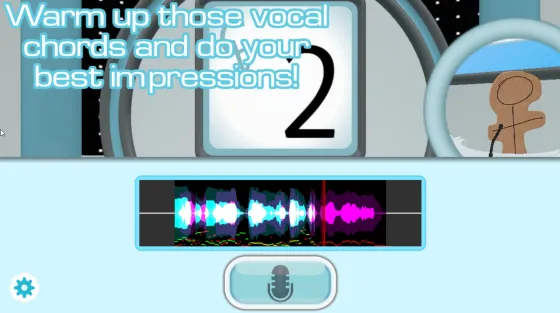
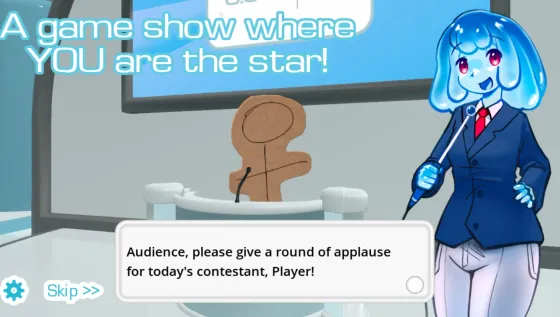
To download the app, you will get links to the Official Website and/or official digital markets.
Pros
- Voice recognition system is genuinely innovative and adds real depth to decision-making
- Narrative consequence tracking across chapters creates a strong sense of authorship
- Full text-based input alternative ensures accessibility for all players
- Strong audio design and adaptive music score enhance immersion significantly
- Art direction is purposeful and consistent throughout Verdana
- High replay value due to tonal modifiers and branching faction outcomes
- Free demo available for players to test before purchasing
Cons
- Mid-game pacing drops noticeably in chapters five and six
- Voice recognition struggles with accented or non-standard speech patterns
- Some branching paths converge toward similar outcomes despite feeling distinct on the surface


